Difference Between Intraday and Delivery Trading Explained
Akshay Hedaoo
1/28/20213 min read
Difference Between Intraday and Delivery Trading Explained
By Akshay Hedaoo | February 05, 2025 | Founder - Netnium
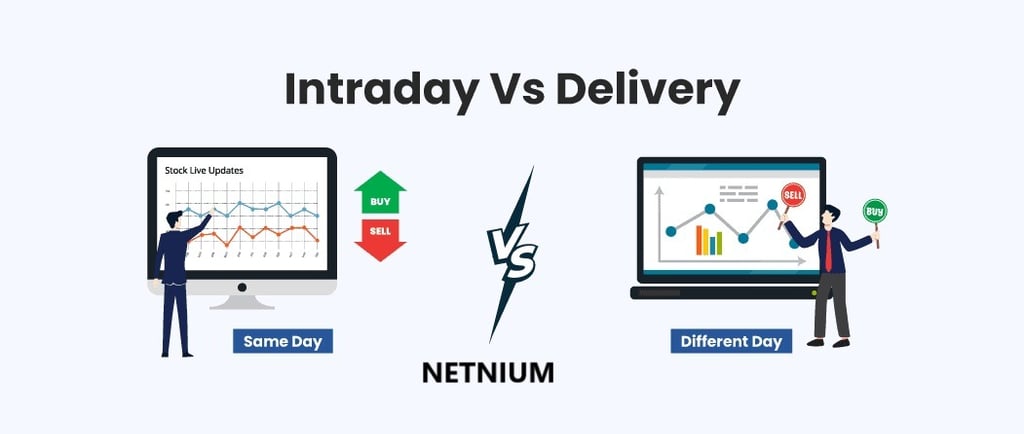
Intraday trading and delivery trading are two common types of stock trading. Both involve buying and selling shares, but the main difference is how long the shares are held. This guide will help you understand stock trading basics and how intraday vs delivery trading works.
Let’s look at their differences and what you need to know before choosing any type of trade.
Contents
What is Intraday Trading?
What is Delivery Trading?
Types of Trading: Short-Term vs Long-Term
Advantages and Disadvantages of Intraday Trading
Advantages and Disadvantages of Delivery Trading
Tax Rules for Intraday and Delivery Trading
Is There Any Margin Difference Between Intraday Trading vs Delivery?
Which Is Better: Intraday or Delivery?
Conclusion
FAQs
What is Intraday Trading?
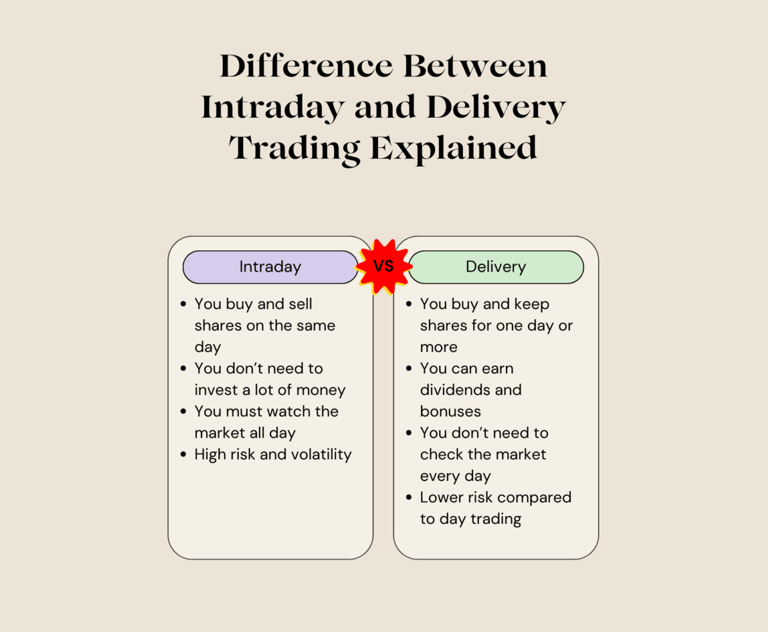
In intraday trading, you buy and sell shares on the same day. The trade must be closed before the market closes. You do not hold these shares overnight.
Example:
It is an intraday trade if you buy 10 shares in the morning and sell them in the afternoon.
Key Points:
You don’t keep the shares for long.
You try to earn from small price changes during the day.
Brokers may give intraday margin or extra money to help you trade more.
What is Delivery Trading?
You buy and keep shares for one day or more in delivery trading. These shares go into your demat account. You can sell them any time later — after a day, a week, or even a year.
Example:
It is a delivery trade if you buy 10 shares and keep them for 3 months.
Key Points:
You become the owner of the shares.
You can sell them whenever you want.
You need to pay the full price for the shares.
Types of Trading: Short-Term vs Long-Term
There are many types of trading, based on how long you keep your shares:
Intraday Trading (Short-Term): You buy and sell on the same day. You do not own the shares.
Delivery Trading (Long-Term): You keep the shares for longer. You become the owner and can get dividends.
Advantages and Disadvantages of Intraday Trading
Advantages:
You don’t need to invest a lot of money. Brokers give intraday leverage.
You don’t worry about overnight market changes.
Profits and losses happen quickly.
Disadvantages:
You must watch the market all day.
Prices can move fast and change suddenly.
You may lose more money because of leverage.
Risk Disclaimer: Intraday trading can be risky. Always understand how margin works before using it.
Advantages and Disadvantages of Delivery Trading
Advantages:
You can keep shares for months or years.
You can earn dividends and bonuses.
You don’t need to check the market every day.
Disadvantages:
You must pay the full share price.
Some charges, like taxes and brokerage, are a bit higher.
Risk Disclaimer: Long-term trading also has risks. Prices may go up or down with time.
Tax Rules for Intraday and Delivery Trading
Intraday Trading:
It is treated as speculative income.
Your profits are added to your income and taxed as per your income slab.
Delivery Trading:
If you keep shares for more than 1 year, it is called long-term. Tax is 10% on gains over ₹1 lakh.
If you sell within 1 year, it is short-term. Tax is 15%.
Is There Any Margin Difference Between Intraday Trading vs Delivery?
Yes. In intraday trading, you get margin or leverage. This means the broker gives you more money to trade.
In delivery trading, you don’t get such a margin. You must pay the full amount.
Which Is Better: Intraday or Delivery?
People often ask: Which is better intraday or delivery?
It depends on:
How much time can you give
How much money do you have
Your comfort with short-term or long-term
Risk Disclaimer: Each method has different risks. Choose only after understanding both.
Conclusion :
Now that you understand what is the difference between intraday and delivery trading, you can see that each type has its own method and purpose. Intraday trading is for those who want to trade quickly within a day. Delivery trading is for those who want to invest and keep shares longer. Both trading types have benefits and risks. Understand how each works before choosing one. Learn slowly and take time to understand stock trading basics.
Disclaimer: Investment in the securities market is subject to market risks. Please read all scheme-related documents carefully before investing. The information provided in this article is for educational and informational purposes only and is not intended as investment advice. Trading in derivatives, including options, involves substantial risk and is not suitable for all investors. Past performance is not indicative of future results. Readers are advised to consult with their financial advisors before making any trading decisions.