How to Start Investing in Mutual Funds: A Complete Guide
Akshay Hedaoo
3/4/20214 min read
How to Start Investing in Mutual Funds: A Complete Guide
By Akshay Hedaoo | February 05, 2025 | Founder - Netnium

A mutual fund is one of the easiest and most effective ways to grow your money over time. You don’t need to be an expert or constantly track the stock market.
When you invest in a mutual fund, your money is pooled together with other investors. A professional fund manager then invests this money in shares (stocks), bonds, or other assets to earn returns. It helps reduce risk and gives better chances of growth over time.
This step-by-step mutual fund guide will help beginners understand how to start investing confidently.
Contents
What is a Mutual Fund?
Set Your Financial Goal
Choose SIP or Lump Sum Investment
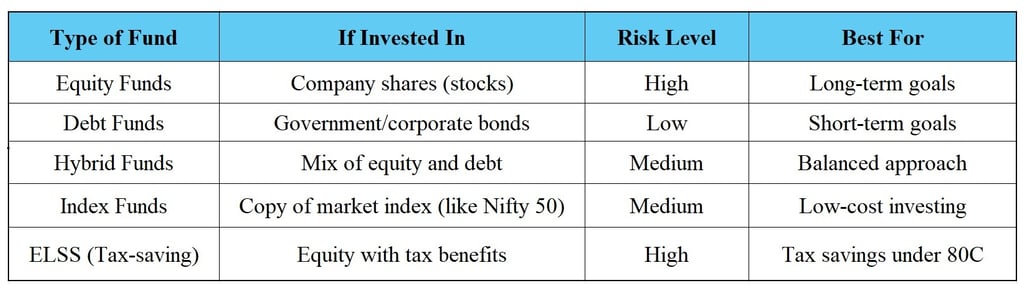
Types of Mutual Funds
Direct vs Regular Mutual Funds
Complete Your KYC Process
Choose a Platform to Invest
Start Your Investment
Track and Review Your Investments
Save Tax with ELSS Funds
Conclusion
FAQs
What is a Mutual Fund?
A mutual fund collects money from many people and invests it in different financial instruments like company shares, government bonds, or gold.
A professional called a fund manager makes investment decisions. When the value of the investments goes up, your money grows too.
It’s a smart option for beginners who don’t want to invest directly in the stock market.
Set Your Financial Goal
Before investing, ask yourself:
“Why am I investing?”
Your goal could be:
Saving for your child’s education
Buying a house
Building a retirement fund
Planning a vacation
Emergency savings
This is called goal-based investing. It helps you choose the right mutual fund based on time and risk.
Example:
For short-term goals (1–3 years) → Choose low-risk debt or liquid funds.
For long-term goals (5+ years) → Choose equity mutual funds for higher returns.
Choose SIP or Lump Sum Investment
There are two main ways to invest in mutual funds:
1. SIP (Systematic Investment Plan):
Invest a fixed amount every month (e.g. 500₹, 1000₹)
Best for salaried individuals and beginners
Builds investment discipline
Reduces the risk of market ups and downs
2. Lump Sum Investment:
Invest a large amount at once (e.g. ₹50,000 or ₹1 lakh)
Suitable when you have extra money (bonus, savings, etc.)
Best when the market is low or for long-term investment
Types of Mutual Funds
Understanding the different types of mutual funds helps you invest wisely.
Direct vs Regular Mutual Funds
You can buy mutual funds in two ways:
Direct Plan:
Buy directly from the mutual fund company (AMC)
Lower fees, higher returns over time
You manage your own investments
Regular Plan:
Buy through an agent, broker, or bank
They guide you, but charge commission
Slightly lower returns due to higher expense ratio
Tip: Choose direct plans if you are comfortable managing your own money.
Complete Your KYC Process :
Before investing, you must complete KYC (Know Your Customer). It’s mandatory by SEBI (market regulator).
You’ll need:
PAN Card
Aadhaar Card
Address proof
Passport-size photo
Mobile number linked to Aadhaar
You can complete e-KYC online in just a few minutes using your Aadhaar and OTP.
Choose a Platform to Invest
You can invest in mutual funds through:
Your bank’s app or website
Official websites of mutual fund companies (AMCs)
Trusted investment apps (e.g., Groww, Zerodha Coin, Kuvera, Paytm Money)
Look for:
Easy user interface
Secure and trusted platform
Clear performance reports
Option to invest in direct plans
Start Your Investment
Now you’re ready to start!
Steps:
Choose a mutual fund based on your goal and risk level
Decide the amount you want to invest
Select SIP or lump sum
Set auto-debit instructions for SIP
Check the NAV (Net Asset Value) – it tells you the current price per unit of the mutual fund
Track and Review Your Investments
You don’t need to check your mutual funds daily.
Best Practice:
Review every 3 to 6 months
Compare returns with similar funds
Make changes if your goals or market conditions change
This is called portfolio rebalancing – it keeps your investment aligned with your goals.
Save Tax with ELSS Funds
If you want to save tax and grow your money, consider ELSS (Equity Linked Savings Scheme).
Why ELSS?
Offers tax benefits under Section 80C (up to ₹1.5 lakh per year)
Has a 3-year lock-in period
Invests mainly in equities
ELSS is one of the best tax-saving investment options with the potential for high returns.
Conclusion :
Investing in mutual funds is a great way to build long-term wealth. You don’t need to be an expert. Just follow these steps:
Set a clear goal
Choose SIP or lump sum
Complete your KYC
Pick the right mutual fund and platform
Track your progress and rebalance when needed
Start small, stay consistent, and let your money grow over time.
Risk Disclaimer
Mutual fund investments are subject to market risks. Please read all scheme-related documents carefully before investing. This article is for educational purposes only and is not financial advice. Consult a SEBI-registered advisor for personalized recommendations.
FAQs
1. Can I withdraw my mutual fund anytime?
Yes, most mutual funds are open-ended. You can withdraw anytime. However, ELSS has a 3-year lock-in. Some funds may also charge an exit load if withdrawn early.
2. How do salaried individuals start SIP?
Choose a comfortable monthly amount, select a SIP date (after salary credit), and set auto-debit from your bank. Use trusted platforms to manage and track.
3. Is mutual fund safer than stocks?
Yes. Mutual funds spread your money across many stocks or bonds, reducing risk. They are less risky than investing in a single stock, but still depend on market performance.
4. Can I invest in mutual funds with ₹500?
Yes! Many mutual funds allow SIPs starting at just ₹500. It's a great way for beginners to start investing regularly.
5. What is NAV in a mutual fund?
NAV stands for Net Asset Value. It’s the price of one unit of a mutual fund. It changes daily based on market performance.